Tens of thousands of CCTV cameras are recording millions of hours of footage a day. But the footage is almost never reviewed.

The cameras are working. The recordings are there. The information exists.

But no insight is being generated. What a wasted opportunity, right?

Yet, something similar happens every day across businesses.

According to a global study conducted by IDC, only 32% of the data available to organisations is actively used, while 68% goes unleveraged.

As someone who spends much of his time designing fleet charging solutions, I find that statistic fascinating.

Because modern EVs are, in many ways, computers on wheels.

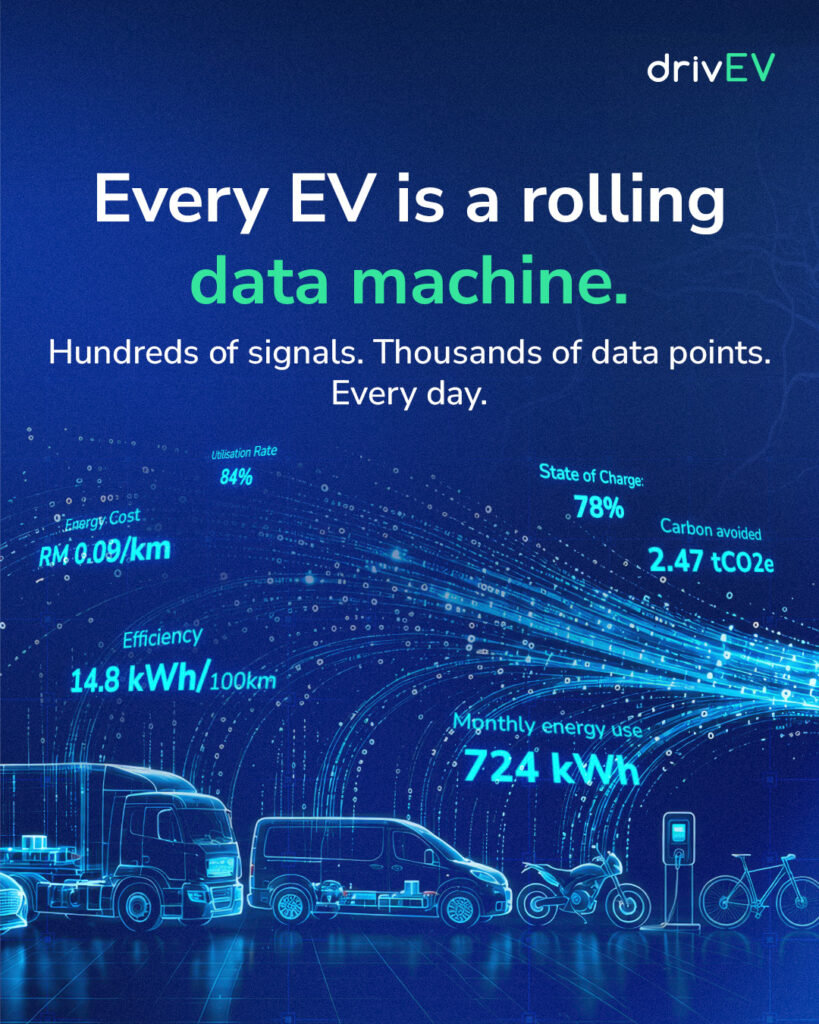
Today’s connected vehicles can contain up to 200 onboard sensors, continuously collecting information about battery health, energy consumption, vehicle performance, charging behaviour, location and driver activity.

In theory, this should make fleet operations more efficient and more predictable than ever before. In practice, it doesn’t.

The challenge is no longer collecting data. It’s knowing what to do with it.

The data is there. The insight often isn’t.

A common misconception about digitalisation is that more data automatically leads to better decisions. It doesn’t.

In fact, many fleet operators are already surrounded by enormous amounts of data. information flows across their vehicles, chargers, telematics systems and operational platforms. The issue is that this information often exists in separate systems and dashboards, making it difficult to see the bigger picture.

As a result, operators frequently find themselves in one of two situations.

Some have limited visibility into what is happening across their fleet. Others have so much information that they struggle to identify what truly matters.

Neither scenario helps decision-making, because data by itself has very little value.

Its value comes from the actions it enables.

The optimisation problem

Now, consider a seemingly simple question: which charger should a driver use?

At first glance, the answer appears straightforward. Most people assume it is simply the nearest available charger.

But the reality is far more complex.

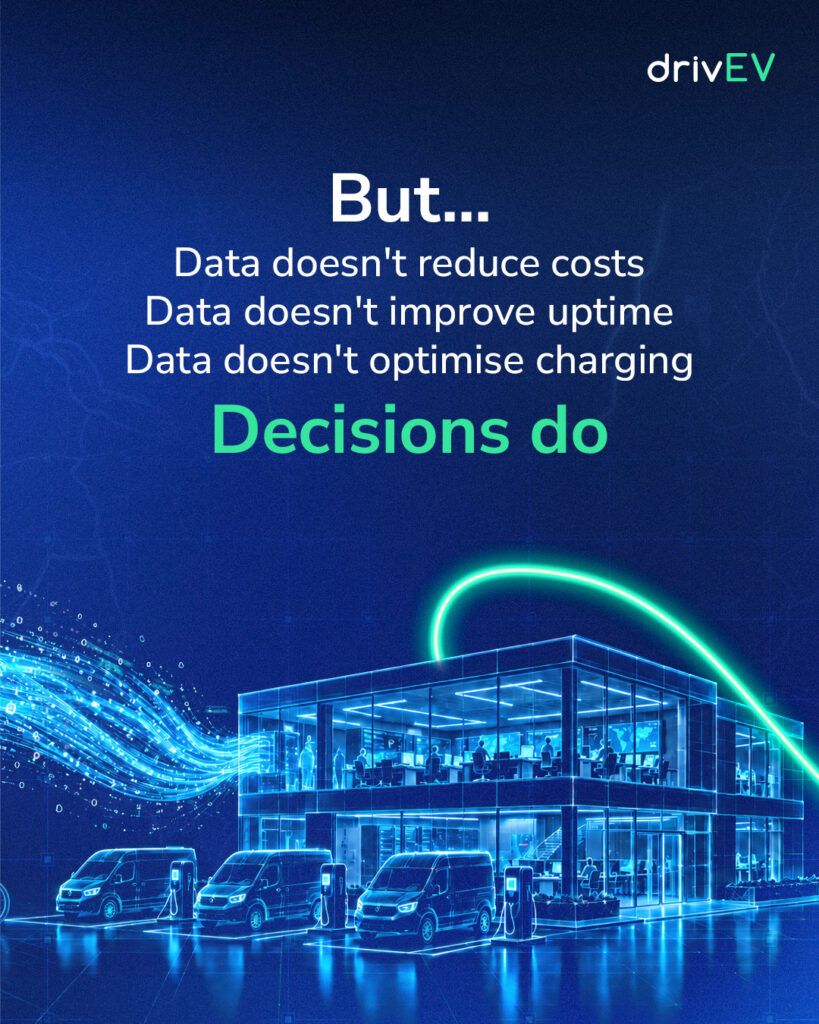
A fleet operator may need to consider the vehicle’s state of charge, battery efficiency, route requirements, remaining range, charger availability, charging speed, electricity cost, anticipated waiting times, parking fees and operational schedules.

Individually, none of these variables are particularly difficult to understand. The challenge comes when they need to be evaluated together, in real time, across dozens or even hundreds of vehicles simultaneously.

This is where electrification stops being a vehicle problem. It becomes an optimisation problem. And optimisation is fundamentally a data challenge.

Turning data into decisions

We sometimes assume that fleet operators want more dashboards, reports and metrics. They don’t. They want confidence that they are making the right decision at the right time.

We’ve already seen this play out in industries such as aviation, manufacturing and logistics, where data is no longer used simply to report what happened. It is used to predict what happens next and recommend the best course of action.

Fleet electrification is heading in the same direction.

For decades, vehicles were primarily mechanical assets. Today, they are becoming intelligent, connected systems that generate a constant stream of operational insight.

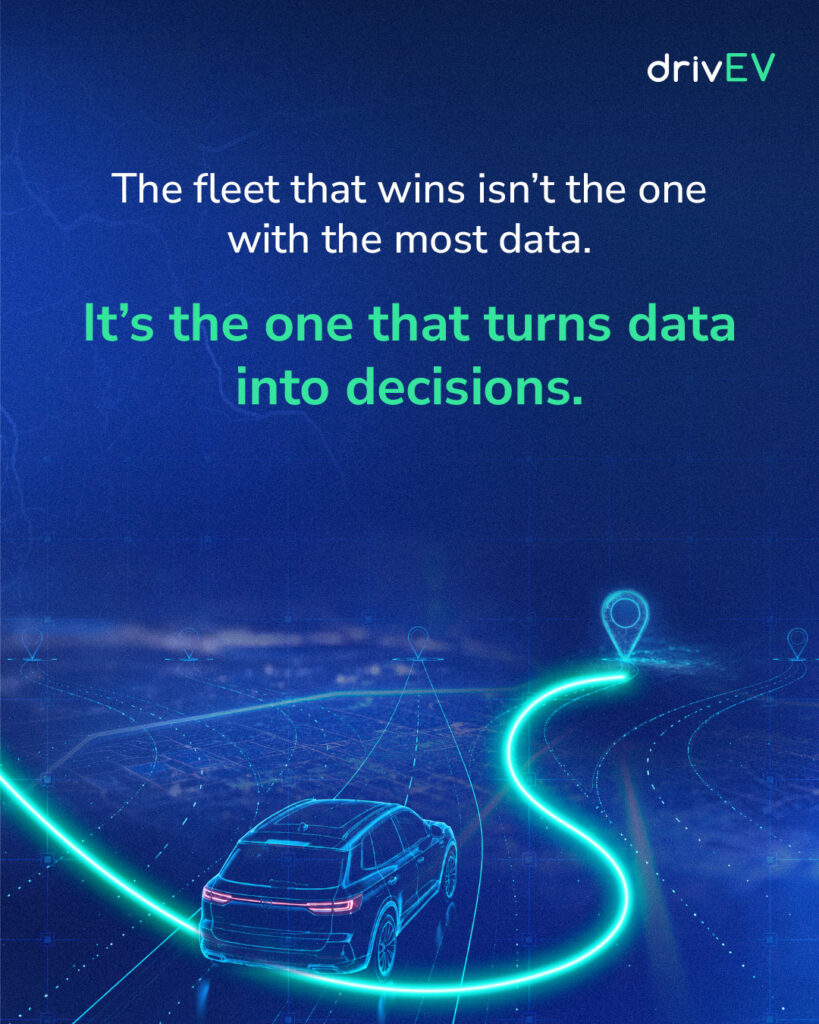
The opportunity is not in collecting more data.

It is in making better use of the data we already have.

Because in the future, the most successful fleets won’t be defined by the vehicles they operate.

They’ll be defined by the quality of the decisions they make.

And increasingly, those decisions will be powered by intelligence hidden in plain sight.
Back

Press Release

Tens of thousands of CCTV cameras are recording millions of hours of footage a day. But the footage is almost never reviewed.

The cameras are working. The recordings are there. The information exists.

But no insight is being generated. What a wasted opportunity, right?

Yet, something similar happens every day across businesses.

According to a global study conducted by IDC, only 32% of the data available to organisations is actively used, while 68% goes unleveraged.

As someone who spends much of his time designing fleet charging solutions, I find that statistic fascinating.

Because modern EVs are, in many ways, computers on wheels.

Today’s connected vehicles can contain up to 200 onboard sensors, continuously collecting information about battery health, energy consumption, vehicle performance, charging behaviour, location and driver activity.

In theory, this should make fleet operations more efficient and more predictable than ever before. In practice, it doesn’t.

The challenge is no longer collecting data. It’s knowing what to do with it.

The data is there. The insight often isn’t.

A common misconception about digitalisation is that more data automatically leads to better decisions. It doesn’t.

In fact, many fleet operators are already surrounded by enormous amounts of data. information flows across their vehicles, chargers, telematics systems and operational platforms. The issue is that this information often exists in separate systems and dashboards, making it difficult to see the bigger picture.

As a result, operators frequently find themselves in one of two situations.

Some have limited visibility into what is happening across their fleet. Others have so much information that they struggle to identify what truly matters.

Neither scenario helps decision-making, because data by itself has very little value.

Its value comes from the actions it enables.

The optimisation problem

Now, consider a seemingly simple question: which charger should a driver use?

At first glance, the answer appears straightforward. Most people assume it is simply the nearest available charger.

But the reality is far more complex.

A fleet operator may need to consider the vehicle’s state of charge, battery efficiency, route requirements, remaining range, charger availability, charging speed, electricity cost, anticipated waiting times, parking fees and operational schedules.

Individually, none of these variables are particularly difficult to understand. The challenge comes when they need to be evaluated together, in real time, across dozens or even hundreds of vehicles simultaneously.

This is where electrification stops being a vehicle problem. It becomes an optimisation problem. And optimisation is fundamentally a data challenge.

Turning data into decisions

We sometimes assume that fleet operators want more dashboards, reports and metrics. They don’t. They want confidence that they are making the right decision at the right time.

We’ve already seen this play out in industries such as aviation, manufacturing and logistics, where data is no longer used simply to report what happened. It is used to predict what happens next and recommend the best course of action.

Fleet electrification is heading in the same direction.

For decades, vehicles were primarily mechanical assets. Today, they are becoming intelligent, connected systems that generate a constant stream of operational insight.

The opportunity is not in collecting more data.

It is in making better use of the data we already have.

Because in the future, the most successful fleets won’t be defined by the vehicles they operate.

They’ll be defined by the quality of the decisions they make.

And increasingly, those decisions will be powered by intelligence hidden in plain sight.