Whenever we speak to businesses exploring EVs, the same questions come up time and time again:
- Will EVs actually save us money?
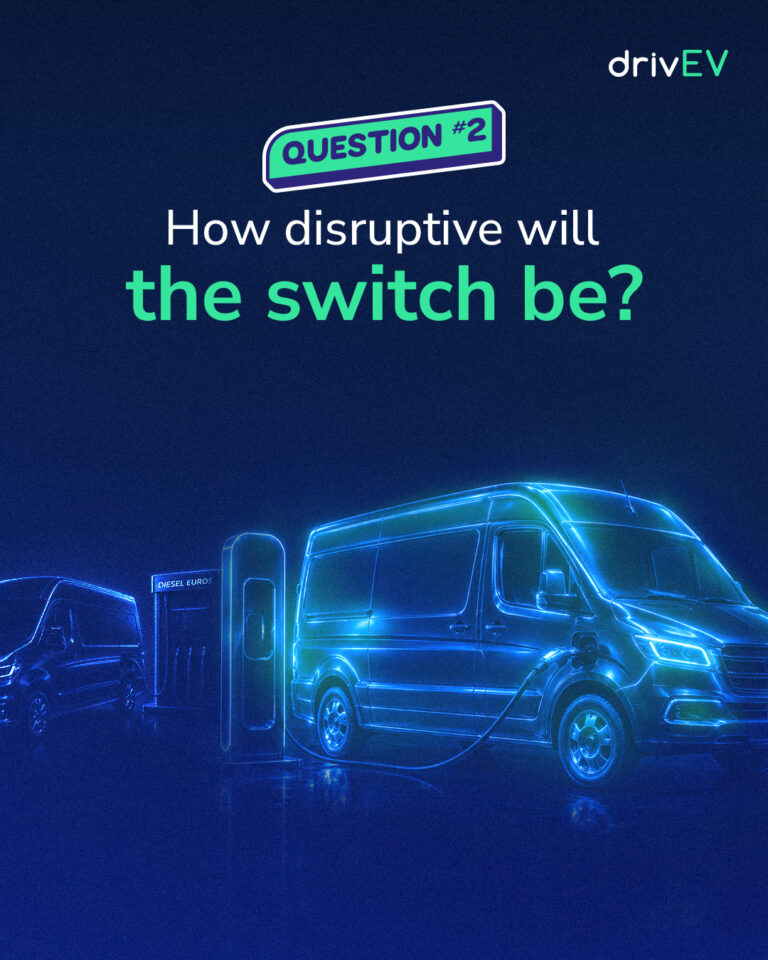
- How disruptive will the switch be?
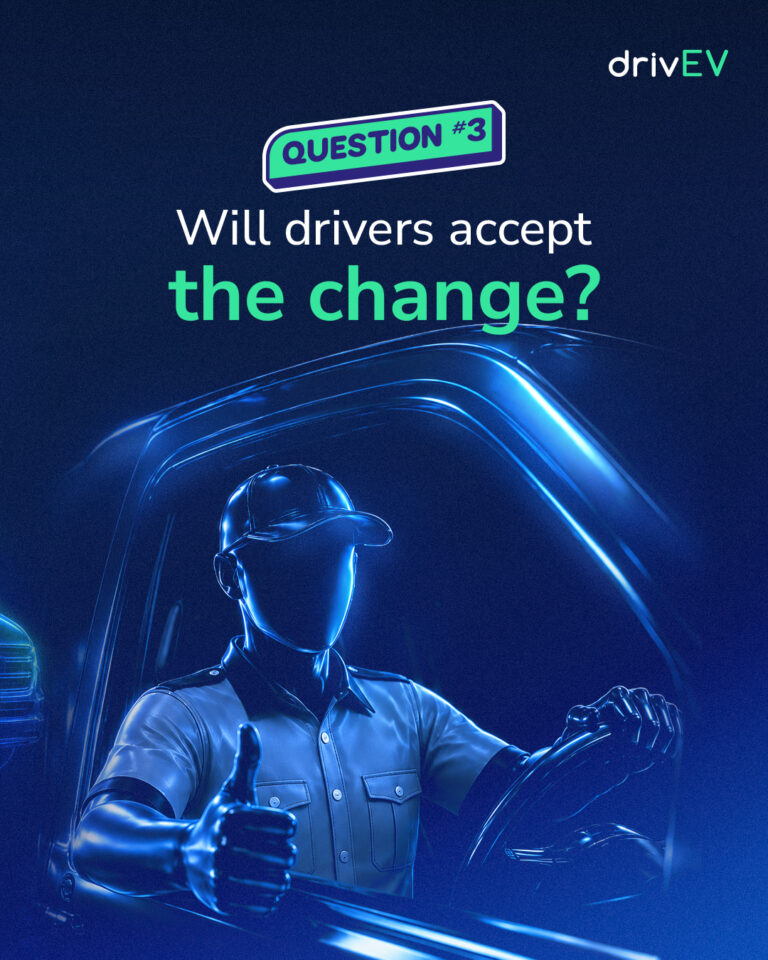
- Will drivers accept the change?
- How much downtime should I expect?
- Will charging slow down day-to-day operations?
They’re all valid questions, and they boil down to one bigger question: “Will this work in the real world?”
Because fleet electrification isn’t a vehicle decision.
It’s an operational decision.
1. Will EVs actually save us money?
The honest answer is: it depends on how the vehicles are used.
Businesses that focus only on vehicle purchase costs often miss the bigger picture.
What matters is utilisation, energy costs, maintenance requirements, downtime and how long vehicles remain in service.
One thing we’ve observed is that the fleets seeing the strongest results are rarely those focused on vehicle costs alone. They’re the ones looking at total operational performance.
2. How disruptive will the switch be?
Usually less disruptive than people expect.
The bigger challenge isn’t the vehicle – it’s planning:
- Which vehicles are suitable for electrification?
- Where will they charge?
- What routes do they run?
- How will drivers use them?
When those questions are addressed early, the transition tends to be far smoother than many organisations anticipate.
3. Will drivers accept the change?
This concern comes up in almost every discussion.
In practice, we’ve found is that drivers often adapt faster than management expects. Once drivers experience quieter vehicles, instant torque and a smoother driving experience, initial concerns tend to fade quickly.
The challenge is not whether drivers like the vehicles.
It’s helping them develop confidence around charging routines, range planning and new operating habits. Once that confidence is built, adoption tends to accelerate quickly.
4. How much downtime should I expect?
There’s generally less maintenance required for EVs compared to conventional vehicles, for the simple fact that EVs have fewer moving parts, eliminating many routine maintenance items associated with internal combustion engines.
That doesn’t mean maintenance disappears. It simply becomes more predictable, helping fleets reduce unexpected disruptions and downtime.
Businesses also assume that EV downtime will increase because charging takes longer than refuelling. But in our experience, downtime is driven more by how the fleet is managed. A well-planned EV fleet can remain productive when charging is built into operational schedules… which brings us to the next question….
5. Will charging slow down day-to-day operations?
This is perhaps the most common question we hear.
Our answer is no, charging doesn’t necessarily disrupt operations – but there is a caveat.
Many businesses assume charging will disrupt operations because it takes longer than refuelling. But in practice, successful EV fleets don’t treat charging as a separate activity. They integrate it into the normal flow of the working day.
Vehicles may charge overnight, during shift changes, while loading and unloading, or during other periods when they’re already stationary. The specifics differ from fleet to fleet, but the principle is the same: charging works best when it fits around operations, rather than the other way around.
The bigger lesson
What we’ve learnt from working with fleets is that successful electrification is rarely determined by the vehicle itself. The organisations seeing the best outcomes are usually the ones thinking beyond the vehicle.
That’s why the most important question isn’t whether EVs work.
It’s whether the broader operating model supporting them works too.
Because fleet electrification isn’t just about getting vehicles on the road.
It’s about keeping them productive once they’re there.